
Small Business Ideas in South Africa 2026: 12 That Actually Work
You don't need a business degree or a big loan to start earning. These 12 small business ideas are practical, low-cost, and suited to South African conditions — from Joburg suburbs to Limpopo townships.
Jump to any idea:
12 Small Business Ideas South Africans Are Starting Right Now
South Africa's unemployment rate is pushing 33%. For most people, waiting for a formal job offer is not a strategy. These 12 small business ideas give you real options — whether you're in Soweto, Stellenbosch, or a small town in KwaZulu-Natal.
Most of these businesses can be started with under R2,000. Several cost nothing but time. All of them suit someone working from home or their local area. And every single one can be scaled once you've built a client base.
In our experience researching the South African gig economy since 2003, the people who succeed are not those with the best idea — they're those who pick one, start small, and stay consistent.
Courier & Delivery Service — Best Small Business for Anyone with a Vehicle
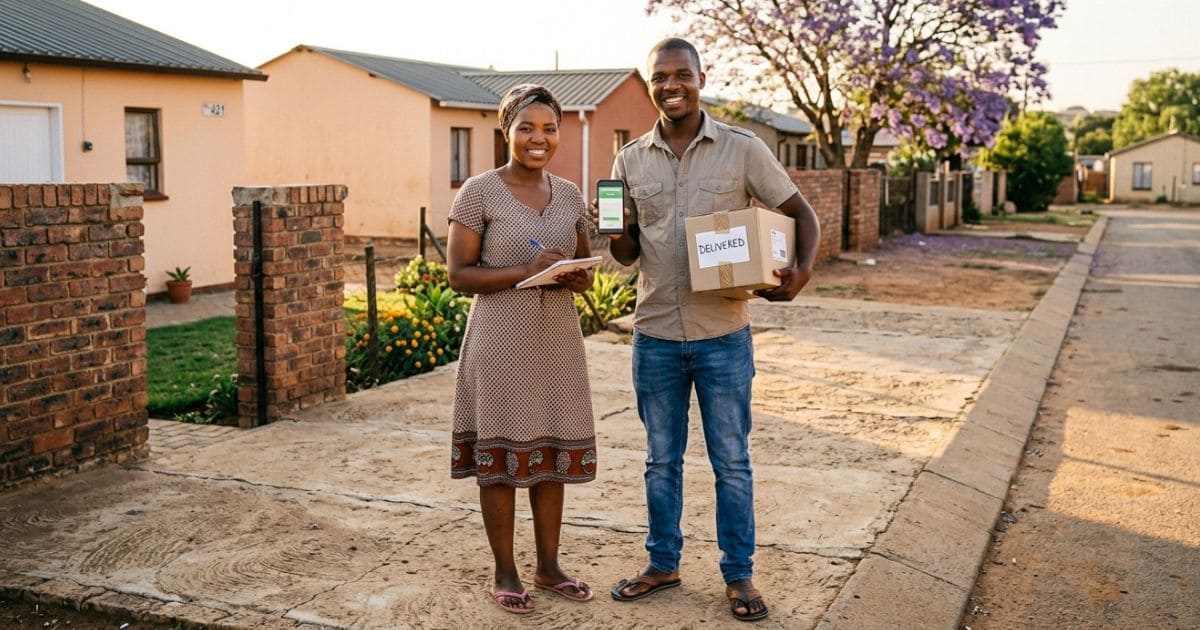
The delivery economy in South Africa has grown sharply since 2020. Platforms like Uber Eats, Mr D Food, Pudo, and Takealot Courier all use independent contractors. You can sign up and start earning on your terms — no employer needed.
If you'd rather build your own independent courier business instead of working for a platform, you'll need:
- A vehicle — car, van, motorbike, or even a bicycle for local jobs
- A cell phone with data for communication and WhatsApp
- Printed waybills or a generic delivery note book from any stationer
- 500 flyers distributed in your target neighbourhood — print at Pick n Pay, Clicks, or your local print shop for around R200
Many independent courier operators in Gauteng, Cape Town, and Durban earn R15,000–R25,000 a month after running this as a one-person business for six months. Your actual earnings depend on how many hours you work and which areas you cover.
➜ Read the full guide: How to become a courier driver in South Africa
➜ Also see: Courier companies looking for owner drivers in SA
Babysitting & Childminding — High Demand, Low Startup Cost
Start by offering your services to friends and family. Word-of-mouth is your most powerful marketing tool here. Once you've built a reputation for reliability and care, parents will refer you to their friends and colleagues.
Current going rates in Johannesburg and Cape Town range from R100–R200 per hour for evening babysitting. Weekend overnight rates can reach R600–R1,000 for a full night.
Platform options in South Africa include SOS Nanny and local Facebook community groups in your suburb. These can connect you with parents looking for regular help rather than one-off jobs.
- First aid certification from St John Ambulance SA adds serious credibility (course costs R500–R800)
- A simple written agreement protects both parties
- Offering a regular weekly slot to working parents gives you predictable income
Woodworking Business — Profitable Home-Based Business Idea in South Africa
Tables, shelves, garden furniture, and children's toys all sell well. The South African market has strong appetite for locally made, quality wooden items — especially among homeowners in Johannesburg's northern suburbs, Cape Town's southern suburbs, and coastal towns like Knysna and Mossel Bay.
Post your products on Gumtree SA, Facebook Marketplace, and bidorbuy.co.za. A basic wooden pallet table that costs R300 in materials can sell for R1,200–R2,500.
➜ Read our full guide: How to start a woodworking business from home in SA
Private Tutoring Business — High-Demand Income for South Africans with Subject Knowledge
South African parents spend billions annually on private tutoring. If you have a solid Matric result in Mathematics (50% or above at Higher Grade), you can comfortably tutor Grade 8–12 learners.
You can find students through teachme2.co.za, which matches tutors with learners across South Africa. Alternatively, advertise through your local school's notice board, community Facebook groups, or WhatsApp neighbourhood groups.
- Mathematics, Physical Science, and English are always in demand
- Online tutoring via Zoom or Google Meet lets you tutor from anywhere in SA
- Groups of 2–3 learners at once increases your hourly income without much extra work
- Matric exam prep in Term 3 is peak season — rates go up
Want more income ideas for South Africans?
We've put together a full list of side hustles that work alongside a job — or as your main income source.
See all side hustle ideas for South Africans →House Cleaning Business — Steady Demand Across South Africa
The advantages of running your own cleaning service over being a domestic worker are significant. You set your own hours, your own rates, and you're building equity in a business — not just trading time for a fixed wage.
In areas like Rosebank, Sandton, Sea Point, and Umhlanga, a professional clean of a 3-bedroom home typically commands R500–R900 per visit. A basic end-of-tenancy clean of an empty flat can fetch R1,200–R2,500 depending on size and condition.
To run this profitably, target a specific suburb or area. Driving between jobs eats your time and your margin. With 3–4 clients in the same area, you can run a solid part-time income. With a small team, you can scale to a full operation.
- Start with your own equipment — a mop, cloths, basic cleaning products
- Build your reputation through friends, family, and your church or community
- Advertise on local Facebook groups and Gumtree SA
- Reliable, consistent service builds the referral base that grows your business
Home Daycare / Crèche Business — Constant Need in Every SA Community
You'll need to register as a child care facility with your local municipality and with the Department of Social Development (DSD). The registration process takes time but protects both you and the families you serve.
Start with a small group of 3–5 children to build your reputation. In most South African neighbourhoods, word travels fast among parents. A clean, safe, stimulating environment with a trusted caregiver is something many families actively struggle to find.
- DSD registration is essential — operating unregistered carries legal risk
- A first aid certificate is strongly recommended
- Start small with friends and family to build references and experience
- Consider a government subsidy — registered ECD centres may qualify
Photography & Videography Business — Creative Small Business With Real SA Demand
Wedding photography is the most lucrative entry point. Weddings in Gauteng, the Western Cape, and KwaZulu-Natal command R3,000–R15,000 for a full day's shoot depending on your experience and portfolio.
If you're starting out, photograph friends' birthdays, matric functions, and community events for free or reduced rates. Build a portfolio on Instagram, then start charging. Platforms like bidorbuy.co.za also allow you to sell stock photography to South African businesses.
Rent a Room on Airbnb — Passive Income from a Space You Already Have
Cape Town properties on Airbnb consistently rank among the highest-earning in Africa. Even a single room in a shared home can generate R800–R2,000 per night during high season. Outside of tourist season, business travellers sustain demand year-round.
Before you list, understand the body corporate or tenancy rules in your area. Some Cape Town suburbs and Johannesburg estates have restrictions on short-term rentals. Research this before investing in setup.
Thinking about an online income instead?
If you'd rather build a business that earns while you sleep, our guide to starting an online business in South Africa covers exactly that.
How to start an online business in SA →Garden & Landscaping Service — Reliable Income in Any SA Suburb
Most homeowners pay R350–R700 per garden visit, with some large properties in areas like Constantia, Bryanston, and Hillcrest paying R1,000+ for a full day's work. Regular monthly contracts are the goal — they give you predictable income.
Start by advertising on Kandua.com (South Africa's home services marketplace) and your local Facebook suburb groups. Flyers in the post box is also still effective in residential areas.
- Summer months bring lawn cutting work; winter brings pruning and clean-ups
- Offer a "winter maintenance contract" to keep clients through the slow season
- One staff member who you train well doubles your daily capacity
Handyman Service — Skilled Tradespeople Are Scarce and Well-Paid in SA
Small plumbing repairs, electrical light fittings, painting, tiling, and furniture assembly are all in constant demand. Register on Kandua.com, which connects South African homeowners with vetted service providers, and you'll have leads coming to you from day one.
Print 200 flyers and drop them in your nearest suburb. Do a few jobs well and your phone will ring from referrals. Quality workmanship at a fair price builds a reputation faster than advertising.
Candle Making Business — Low-Cost Product Business Built for Social Media
Soy wax, fragrance oils, wicks, and jars can be sourced from craft suppliers in Johannesburg, Cape Town, and Durban for under R1,000 to get started. A set of 6 candles that costs R150 to make can retail for R350–R600.
Sell on bidorbuy.co.za, at local weekend markets (the Neighbourgoods Market in Cape Town and the Joburg Flea Market are established channels), and through your own Instagram or Facebook page. Corporate gift orders in November and December can make this business extremely profitable in Q4.
House Sitting — Flexible Income With Low Competition in South Africa
Property owners across South Africa — especially in secure estate areas and coastal holiday towns — regularly look for reliable house sitters when they travel. Caring for pets typically increases your daily rate significantly.
Build your profile on house-sitting platforms and in local Facebook community groups. Start with people you know personally to build verifiable references. A printed reference letter from a homeowner you know can get your first paid gig.
How to Start House Sitting in South Africa
- Build a short written profile — who you are, where you're from, and why you're trustworthy
- Collect 2–3 reference letters from people who know you personally
- Register on TrustedHousesitters and list your location as South Africa
- Post in your local suburb Facebook group offering your services
- Once you have 3–5 positive reviews, increase your daily rate
Kasi Business Ideas: Which of These Work in Any Neighbourhood?
Not every business idea works equally in every area. Here are the ones that work well in South African townships, kasi environments, and lower-income neighbourhoods — with minimal startup cost and strong local demand.
How to Turn a Small Business Idea Into Real Income in South Africa
Picking an idea is the easy part. The harder part is starting before you feel ready. In our experience, most people who never start are waiting for the "right time" — which doesn't exist.
Every one of the 12 ideas on this list can be tested this week without quitting your job or taking out a loan. Most can be started in a single afternoon. What separates the people who succeed is not their idea — it's their willingness to start imperfectly and improve.
- Pick one idea that matches a skill you already have
- Tell 10 people you're starting — word of mouth is your first marketing
- Set a realistic goal: R2,000 in your first month. Then R5,000. Build from there
- Build an online presence — even a basic Facebook page beats nothing
- Register your business with CIPC once you're earning consistently — it takes the business seriously and so will clients
Frequently Asked Questions About Small Business Ideas in South Africa
The best small businesses to start with little money in South Africa are courier delivery, babysitting, tutoring, and garden services. All four can be started for under R500 — and in some cases for free. Courier delivery is particularly strong if you already own a vehicle, because you can register with Uber Eats or Mr D Food and earn your first income within days. Tutoring requires no startup cost at all — just knowledge of your subject and a way to reach local students.
The best kasi business ideas in South Africa are ones with high local demand and low startup cost: babysitting, daycare, tutoring, and handyman services work well within the community itself. Courier delivery and garden services work by servicing the surrounding suburbs. Candle making and woodworking can be sold at local markets or online through platforms like Facebook Marketplace SA and bidorbuy.co.za — you don't need to be in a wealthy area to sell online.
You can start several of the businesses on this list for under R500 — and some for nothing at all. Babysitting, tutoring, and house sitting cost nothing to start. A garden service needs only R200 for flyers, plus tools you may already own. A courier business needs a vehicle (which many people already have) and a cell phone. The house cleaning and handyman businesses need R200–R800 in materials and equipment to begin.
The most profitable small business in South Africa depends on your skills and location. In terms of margin, Airbnb room rental and photography businesses offer high returns relative to input costs — but they require the right location or equipment. For someone starting from nothing, courier delivery and tutoring offer the fastest path to income. House cleaning, once you build a team, can scale into a very profitable operation because labour costs are manageable and client retention is high.
You don't need to register to start earning, but registering your business with the CIPC (Companies and Intellectual Property Commission) adds credibility, allows you to open a business bank account, and protects your business name. Registration costs around R175 for a sole proprietor or R125 for a private company (Pty Ltd). Once you're earning consistently, registration is worth doing. For daycare businesses specifically, registration with the Department of Social Development (DSD) is a legal requirement.
Yes. Most of the 12 small business ideas on this list can be run entirely from home. Tutoring, candle making, woodworking, babysitting, daycare, and Airbnb hosting are all home-based businesses. Even courier delivery is managed from home — you take jobs from your phone and go out to collect and deliver. The key advantage of home-based businesses in South Africa is that you eliminate commercial rent, which is one of the biggest costs for small businesses.
Unique small business ideas that are growing in South Africa in 2026 include: renting out a room or flatlet on Airbnb (especially in Cape Town and Johannesburg), selling handmade products like candles through Instagram and local weekend markets, building an independent courier delivery service for small local businesses rather than platforms, and offering corporate photography services to small businesses that need fresh social media content. These sit in the gap between traditional informal businesses and the gig economy.
Ready to move from idea to income?
The courier opportunity is one of the fastest small businesses to activate in South Africa. If you have a vehicle, you could be earning this week.
How to become a courier driver in South Africa →