
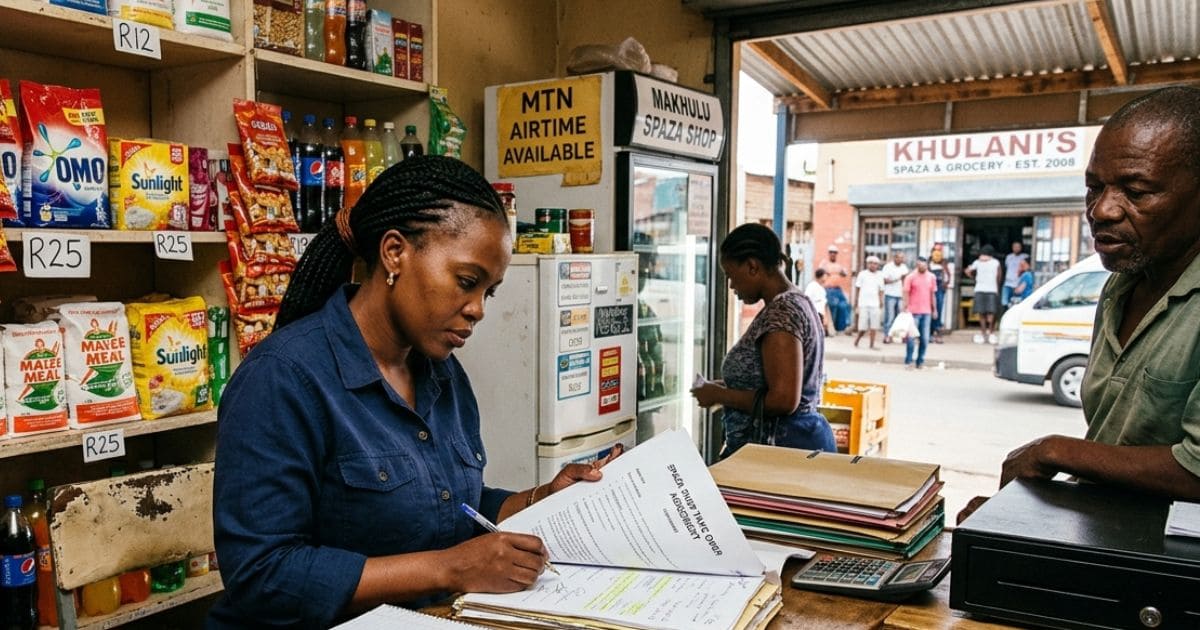
Buying an Existing Spaza Shop in South Africa
You can buy or take over an existing spaza shop by negotiating stock, fittings, and the lease directly with the outgoing owner, then re-registering the trading permit, CIPC entity, and Certificate of Acceptability in your own name, since none of these transfer automatically. With foreign-owned shops closing in several areas, taking over an existing shop is often faster than starting from scratch, but budget for higher restocking costs until you build your own supplier relationships.
Contents
Buy an Existing Shop or Start Fresh?
With foreign-owned spaza shops closing in several communities as owners left the country, existing premises, stock, and customer relationships are becoming available faster than usual. That's a real opportunity, but it's not automatically the easier or cheaper path. For a full comparison of costs either way, see our guide to starting a spaza shop in South Africa and our startup costs breakdown.
Where to Find a Spaza Shop for Sale
Most spaza shop sales aren't formal business listings, they're bundled into a property sale or simply passed on through local networks. Keep an eye on:
- Property listing sites, where a spaza shop is often mentioned as a feature of a residential property for sale
- Local community Facebook groups and WhatsApp groups, where closures and handovers are often discussed before they're formalised
- Direct conversations with shop owners you know are considering leaving the area
- Ward councillors and local business forums, who often hear about closures early
Due Diligence Checklist
- Lease or ownership — confirm who actually owns the property and whether the current lease (if any) is transferable or needs to be renegotiated with the landlord directly
- Registration status — check whether the shop currently holds a valid trading permit and Certificate of Acceptability, since this affects how quickly you can legally reopen
- Daily takings — ask to see a few weeks of sales records if available, or observe foot traffic yourself at different times of day
- Supplier relationships — find out who the shop currently buys from and at what prices, since this affects your margins from day one
- Outstanding debts — confirm the shop has no unpaid supplier accounts or municipal fines that could follow the business
- Stock condition — check expiry dates on anything you're being asked to pay for as part of the deal
For a professional-grade due diligence process on a larger acquisition, South African business buying guides recommend involving an accountant to review financial records and a lawyer to check the sale agreement, though for a small spaza shop this is often proportionate to do informally yourself.
Valuing Stock, Fittings & Goodwill
| What you're valuing | How to approach it |
|---|---|
| Stock | Cost price, not retail price, and only for items with reasonable shelf life remaining |
| Shelving & fittings | Second-hand market value based on age and condition, not replacement cost |
| Fridges & equipment | Test they're working before agreeing a price; factor in remaining lifespan |
| Goodwill / location | Harder to price objectively; weigh it against how easily you could build the same customer base from scratch at that location |
Negotiating the Deal
A written agreement doesn't need to be complicated, but it should clearly state: the total price and what it covers (stock, fittings, goodwill), the handover date, both parties' full names and ID numbers, and confirmation that the seller has the right to sell what's being sold. This protects you if a dispute comes up later, and it's a reasonable request even in an informal transaction between two individuals.
Re-Registering in Your Name
This is the step most first-time buyers underestimate. Even if the shop has traded at that address for years under someone else's name, you're legally starting from zero on paperwork. The good news is the process itself is the same as registering a brand-new shop. For the complete document checklist and current requirements, see our spaza shop registration requirements guide.
Don't open under the previous owner's permit, even temporarily. Trading without your own valid registration is treated the same as any other unregistered shop, and it also blocks you from applying for funding like the Spaza Shop Support Fund until it's sorted.
Buying From a Foreign National Who's Leaving
Know the legal line here
Buying a business from a foreign national who is legally and validly operating it themselves is completely legal. It becomes a criminal offence under the Immigration Act of 2002 if the arrangement is a front, meaning you register the business in your name while an undocumented foreign national continues to actually own and run it. Make sure the sale is genuine: you take real ownership, control, and financial risk, not just your name on paperwork.
If you're taking over from a foreign national who is leaving the country, confirm they genuinely own what they're selling to you (stock and fittings, not necessarily the property itself), and that the transaction is a clean, final handover rather than an ongoing arrangement where they retain involvement in the business. If anything about the deal feels like you'd be a name on paper while someone else keeps running the shop, walk away.
What to Expect After Taking Over
This is the honest part most guides skip. Recent reporting from Durban townships found that bread and other basics have gotten noticeably more expensive at spaza shops taken over by South Africans, with residents describing paying R30 for a loaf that cost R20 under the previous foreign owner. The reason is usually structural, not opportunistic: foreign-owned shops often buy collectively across a network of stores, unlocking bulk discounts that a single new owner starting out doesn't have access to yet.
Two things help close that gap over time: joining or forming a buying group with other local spaza owners to negotiate collectively, and applying for the Spaza Shop Support Fund, which is specifically designed to help registered South African owners access better supplier terms as part of its non-financial support. As of mid-2026, government reporting shows only 2,369 businesses approved out of the fund's R500 million budget, with more than R320 million still unallocated, so there's real room to apply.
Sources: CIPC, the Department of Trade, Industry and Competition, gov.za, the Spaza Shop Support Fund.
Frequently Asked Questions About Buying an Existing Spaza Shop
Yes. You can negotiate directly with the outgoing owner for the stock, fittings, and lease, but you'll need to register the premises under your own name with the municipality and CIPC, since permits and registrations don't transfer automatically to a new owner.
Property listing sites like Gumtree Property often list spaza shops for sale, usually bundled with the residential property they operate from. Word of mouth and local community groups are also common ways to hear about shops closing or changing hands.
Yes. Municipal trading permits, CIPC registration, and Certificates of Acceptability are issued to a specific owner and don't transfer when a shop changes hands. You must apply for all three in your own name before trading. See our registration requirements guide for the full checklist.
Value existing stock at what the previous owner paid for it, not at retail price, and check expiry dates carefully before agreeing to pay for it. Fittings like shelving and fridges should be valued separately based on condition and age.
Check the lease or property ownership documents, the shop's current registration and permit status, roughly how much it takes in daily, its supplier relationships, and whether the previous owner has any outstanding debts tied to the business.
Yes, provided the foreign national is legally and validly operating the business themselves. It becomes illegal if the arrangement is a front, meaning a South African is used to register a business that an undocumented foreign national actually owns and runs, which is a criminal offence under the Immigration Act.
Often, yes, at least initially. Foreign-owned spaza shops have typically pooled buying power across multiple shops to negotiate lower supplier prices, which new individual South African owners usually can't match right away, leading to higher restocking costs that sometimes get passed on to customers.
Yes, you can keep the shop name and trade from the same location, but the shop's registration, trading permit, and CIPC entity must be in your name. Customers generally stay if service and stock availability remain consistent through the handover.
There's no fixed price, since it depends on stock value, fittings, location, and how much goodwill the previous owner is asking for. Expect to pay at minimum the value of usable stock and fittings, which is often comparable to or slightly less than starting from scratch. See our startup costs guide for a comparison baseline.
Yes. Even for a small, informal-feeling transaction, put the agreed price, what's included, the handover date, and both parties' details in writing and signed, so there's a clear record if a dispute arises later.
Yes, once you've completed your own municipal and CIPC registration in your name, you can apply for the Spaza Shop Support Fund and other programmes on the same basis as someone starting a new shop.
The most common mistakes are skipping due diligence on daily takings, assuming registration transfers automatically, underestimating higher restocking costs without the previous owner's bulk-buying networks, and not putting the sale agreement in writing.