
Courier Companies Looking for Owner Drivers in South Africa (2026)
13 South African courier companies are actively recruiting owner drivers and independent contractors in 2026, including DSV, Skynet, Fastway, TM Freight and The Courier Guy. Pay ranges from R12,000 to R35,000 a month depending on the company and route, and most require your own bakkie, van or car.
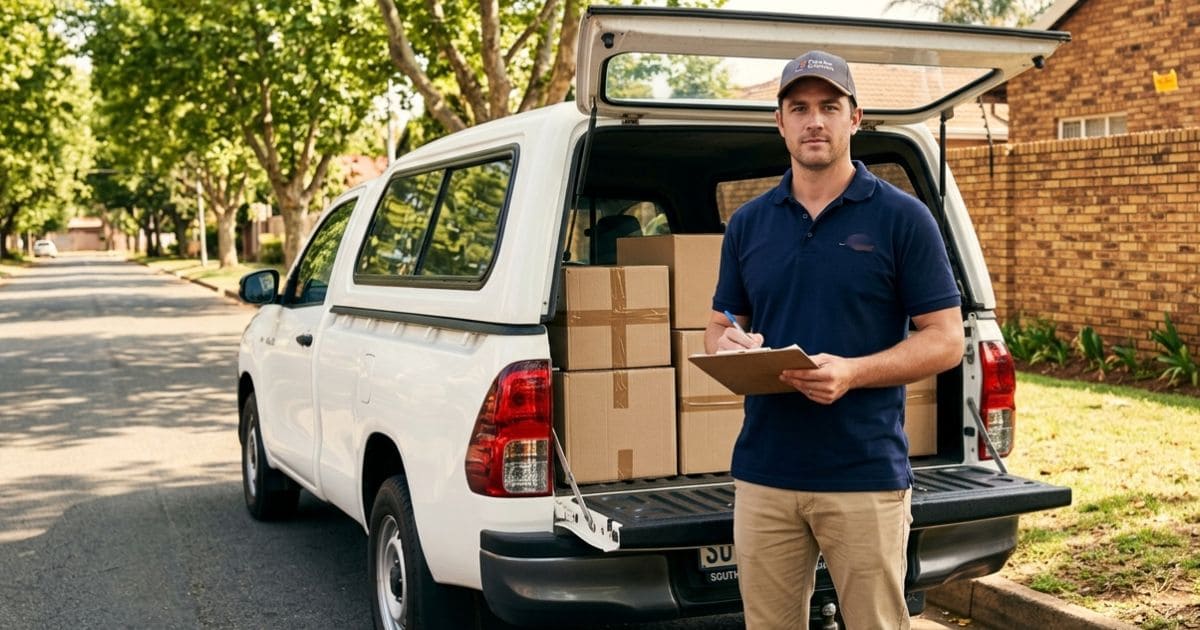
An owner driver in South Africa is a self-employed contractor who uses their own vehicle to make deliveries for a courier company, paid per delivery rather than a fixed salary. Some companies call this role an independent contractor courier position rather than an owner driver role, but the arrangement is the same. We've tracked SA courier hiring patterns since 2020 and spoken with active owner drivers across Gauteng, KwaZulu-Natal and the Western Cape. If you're comparing this against other routes into delivery work, our courier driver jobs in South Africa hub covers every option in one place, including employed positions and gig-app work.
Quick Comparison: 13 Companies Hiring Owner Drivers
| Company | Vehicle | Monthly Earnings | Provinces | Pay Model |
|---|---|---|---|---|
| DSV | Bakkie / Van | R18,000-R35,000 | GP, WC, KZN | Per delivery + route |
| Skynet Couriers | Bakkie / Van | R14,000-R26,000 | GP, WC, KZN, EC | Per delivery / Droppa |
| Fastway Couriers | Bakkie / Car | R12,000-R22,000 | GP, WC, KZN, NW | Franchise per delivery |
| The Courier Guy | Bakkie / Car | R13,000-R24,000 | Nationwide | Per delivery |
| RTT / CourierIT | Bakkie (½-ton min) | R14,000-R25,000 | GP, WC, KZN | Bakkie contract |
| DHL (self-employed) | Bakkie / Van | R16,000-R28,000 | GP, WC, KZN | Multi-drop route |
| Netmat Logistics | 1-ton bakkie / truck | R16,000-R30,000 | GP, WC | Fixed route contract |
| TM Freight | Bakkie / Van | R14,000-R24,000 | GP, KZN | Per delivery / fixed route |
| Makro (own vehicle) | 1-ton bakkie / van | R15,000-R28,000 | GP, WC, KZN | Fixed-route contract |
| Aramex SA | Bakkie / Van | R14,000-R24,000 | GP, WC, KZN | Per delivery |
| Buffalo Express | Bakkie | R13,000-R20,000 | Mpumalanga, GP | Per delivery |
| QikTruck | Any truck / bakkie | R10,000-R25,000 | JHB, CPT, DBN | Per load (app-based) |
| CourierX | Bakkie | R12,000-R20,000 | GP, WC | Per delivery |
Note: earnings are estimates based on driver reports and available industry data. Actual income depends on route, volume and how efficiently you work. Last updated: 28 September 2026.
Each Company in Detail
DSV Owner Driver Programme
DSV is South Africa's largest logistics company and, in our research, consistently the highest-paying owner-driver programme for drivers with a reliable bakkie or van. DSV uses owner drivers as subcontractors for last-mile delivery, mainly in Johannesburg, Pretoria, Cape Town and Durban.
DSV contracts typically cover a fixed area with a guaranteed minimum number of stops a day, which gives more income predictability than pure per-delivery pay. Drivers on established Gauteng routes report R22,000-R35,000 a month.
What DSV looks for: a roadworthy bakkie or panel van under 10 years old, a valid Code 10 licence for larger vehicles, comprehensive insurance with commercial courier cover, goods-in-transit insurance of at least R50,000, a police clearance certificate under 6 months old, and a smartphone with data.
How to apply: visit the DSV South Africa careers page and search "owner driver" or "subcontractor," or email regional operations directly. See our full DSV driver vacancies guide for application emails and current openings by province.
Skynet Couriers Owner Driver Programme
Skynet, part of the international Skynet Worldwide Express network, is one of South Africa's biggest express parcel operators, running 35 hubs nationwide and moving over a million parcels a month. Skynet pays owner drivers per delivery, with rates varying by parcel type, size and area. Its corporate client base generally means better-maintained routes with more consistent daily volumes than pure e-commerce work.
Skynet has also partnered with the Droppa logistics platform specifically to connect bakkie and truck owners with paying delivery jobs across its network, giving owner drivers a second route into Skynet-linked work beyond direct subcontracting.
The Skynet couriers owner drivers salary typically sits at R14,000-R26,000 a month, depending on region and daily delivery count, with dedicated Johannesburg business-district routes paying most consistently. Skynet Worldwide Express drivers on international parcel routes report similar figures, since domestic and international volume run through the same branch network.
How to apply: visit skynet.co.za or skynetworldwide.com/za and check the Careers section for current Skynet couriers owner drivers vacancies, phone your nearest branch and ask for the operations or subcontractor manager, or apply through the Droppa app if you want to work Skynet-linked loads as a bakkie or truck owner.
Fastway Couriers Owner Driver Opportunities
Fastway operates on a franchise model, so joining Fastway means becoming a franchise courier rather than a subcontractor. Each franchisee owns their delivery route and builds a client base within it, which suits drivers who want to grow a real business rather than take a job.
Fastway franchisees typically earn R12,000-R22,000 a month net of fuel and running costs, with high performers in dense suburbs earning more as they build route efficiency and repeat clients.
How to apply: visit fastway.co.za and go to the Franchising section, complete the online enquiry form, or phone your nearest regional depot. Mention you want an owner-driver franchise, not employment.
The Courier Guy Owner Driver / Subcontracting
The Courier Guy, headquartered in Randburg, Gauteng, runs one of South Africa's largest domestic delivery networks and actively uses subcontract owner drivers for last-mile residential and suburban delivery, separate from its employed driver fleet.
They handle high volumes of e-commerce deliveries from Takealot, Bash and direct-to-consumer stores, so drivers in suburban Johannesburg and Cape Town can expect 40-80 drops a day on active routes.
How to apply: go to their dedicated subcontracting website, complete the registration form, pass their vehicle inspection, and get assigned routes when capacity opens in your area. Have your vehicle details, licence and insurance certificate ready first.
RTT Bakkie Contracts and CourierIT
RTT is one of South Africa's oldest logistics businesses, now operating primarily under the CourierIT brand from its Cape Town International Airport hub and provincial branches. An RTT bakkie contract is a subcontractor agreement paid per delivery or per kilometre, with Gauteng contracts the most common and mostly corporate volume.
How to apply: visit courierit.co.za or phone the Western Cape head office and ask for the Owner Driver Scheme coordinator, or approach your nearest provincial branch directly.
DHL Self-Employed Delivery Driver
DHL South Africa uses self-employed drivers for multi-drop routes in urban metro areas, typically 50-100 deliveries a day. Because DHL handles international parcels with higher declared values, rates per delivery tend to be higher than domestic-only couriers, but so are the vehicle and insurance requirements.
How to apply: visit dhl.com/za, go to Careers, and search "owner driver" or "independent contractor," or call your nearest DHL ServicePoint and ask about subcontractor opportunities.
Netmat Logistics Owner Driver Contracts
Netmat Logistics uses owner drivers for fixed distribution routes rather than per-delivery work, so you run the same routes daily for more predictable income. They work with retail, manufacturing and FMCG clients, so volumes track business activity rather than e-commerce peaks.
How to apply: search "Netmat Logistics" on LinkedIn for current postings, or visit netmat.co.za for contact details.
TM Freight Owner Driver Applications
TM Freight is a South African freight and courier operator contracting bakkie and van owners for regional delivery routes, mainly across Gauteng and KwaZulu-Natal. Pay is per delivery on flexible routes, or per fixed route on contracted daily runs, depending on the branch and available volume.
How to apply: search "TM Freight owner driver" on LinkedIn or Gumtree for current openings, or contact your nearest TM Freight depot directly to ask about subcontractor vacancies.
Makro Delivery Driver With Own Vehicle
Makro, part of Massmart, contracts independent delivery drivers with their own vehicles for bulk and bulky goods delivery, particularly appliances, electronics and large grocery orders, separate from its employed driver fleet.
How to apply: monitor job boards like PNet and Indeed for Makro last-mile delivery partner roles, or approach the logistics manager at your nearest Makro store.
Aramex South Africa Owner Driver
Aramex South Africa, part of the global Aramex network, handles international express parcels alongside domestic delivery, using independent drivers for last-mile routes in Gauteng, the Western Cape and KwaZulu-Natal. Higher-value parcels mean stricter security requirements but can also mean better rates.
How to apply: visit aramex.com/za and check Careers, or phone their Johannesburg or Cape Town offices and ask about subcontractor opportunities.
Buffalo Express Owner Driver Contracts
Buffalo Express is a South African courier company with a strong presence in Mpumalanga and Gauteng, worth approaching if you're based in Witbank, Middelburg or nearby towns that larger couriers sometimes underserve. You'll need your own bakkie, a clean driving record, and the ability to handle parcels and documents.
How to apply: visit buffaloex.co.za or email their operations team; the Witbank branch gives the fastest response for Mpumalanga opportunities.
QikTruck Owner Driver Opportunities
QikTruck is an app-based logistics marketplace connecting drivers with businesses needing on-demand delivery, working more like a load-matching app than a traditional courier contract. You list your vehicle, accept loads when available, and get paid per job. Income is less predictable than fixed-route work, but you control when you work.
How to register: download the QikTruck driver app or visit qiktruck.co.za; approval usually takes under 48 hours.
CourierX Owner Driver Contracts
CourierX contracts owner drivers with well-maintained bakkies or vans for set delivery routes, mainly around Witbank, Middelburg and surrounding Mpumalanga and Gauteng areas, with waybill and route documentation handled through their operations team.
How to apply: visit courierx.co.za's careers page or email their operations department directly with your vehicle details and area.
How to Become an Owner Driver in South Africa: Step-by-Step
-
Confirm your vehicle qualifies
Your bakkie or van must be less than 10 years old, roadworthy, and registered in your name. Most companies require a half-ton or one-ton bakkie at minimum.
-
Get the correct insurance in place
You need comprehensive vehicle insurance that covers commercial courier use, plus separate goods-in-transit cover. Standard personal insurance usually excludes paid delivery work, so ask your broker to add a courier rider before you apply anywhere.
-
Prepare your document pack
Gather your driver's licence, South African ID or work permit, vehicle registration papers, proof of insurance, and a police clearance certificate no older than 6 months. Keep digital and physical copies of everything.
-
Apply to multiple companies at the same time
Don't wait for one company to respond before applying to others. Apply to at least three at once. DSV, Skynet and The Courier Guy are good starting points.
-
Follow up within 5 business days
Courier HR and operations teams get many applications. A polite follow-up call or email within five working days, stating your vehicle type, area and availability, keeps you visible.
What You Need to Apply
- Valid South African driver's licence: Code 8 minimum, Code 10 for larger vehicles
- Roadworthy vehicle under 10 years old: bakkie, panel van or car depending on the company
- Comprehensive vehicle insurance with a commercial/courier use endorsement
- Goods-in-transit insurance, usually R50,000-R100,000 minimum cover
- Police clearance certificate, not older than 6 months
- South African ID document or valid work permit
- Smartphone with data for delivery apps and GPS
- Active South African bank account for payment
- Clean driving record: no more than 1-2 minor offences depending on the company
Insurance is non-negotiable. Before you sign any owner-driver contract, confirm your policy explicitly covers commercial delivery use with your insurer, or check general guidance from the South African Reserve Bank on financial product disclosures. If you're in an accident while delivering on a personal-use policy, your insurer can refuse the claim, leaving you personally liable for the damage and any lost parcels.
If you don't yet own a vehicle and want to start earning sooner, our step-by-step guide to becoming a Checkers Sixty60 driver covers a scooter-based route into delivery work with no vehicle purchase needed. If you already have your vehicle sorted, our courier driver equipment checklist covers the basics worth having before your first day on the road.
How Much Owner Drivers Earn in South Africa
- Entry-level (first 3 months): R10,000-R15,000 a month, while you learn routes and build efficiency
- Established route (6-12 months in): R18,000-R28,000 a month, once you know your area and have optimised your day
- Multi-company or high-volume driver: R28,000-R40,000+ a month, for drivers running more than one company or a dedicated corporate route
Remember: these are gross figures. Fuel, maintenance, insurance and data typically run R4,000-R8,000 a month depending on your vehicle and route distances. Factor this in before setting your income expectations.
If you're weighing this against gig-app delivery work instead of a formal contract, our Checkers Sixty60 driver salary breakdown shows what a scooter-based gig role really pays after costs and tips, and our delivery driver salary comparison covers Takealot, Mr D and other platforms side by side.
What Owner Drivers Actually Spend Each Month
Most first-time owner drivers budget for fuel and stop there. The bigger costs sit elsewhere: vehicle finance and insurance usually cost more per month than fuel does, and they're due whether you drive 10 deliveries a day or none.
| Cost category | Typical range | Notes |
|---|---|---|
| Vehicle finance instalment | R2,500-R5,500 | If financed; skip this if your bakkie is paid off |
| Comprehensive + commercial cover | R900-R2,200 | Courier use costs more than personal-use cover |
| Goods-in-transit insurance | R250-R600 | Separate from vehicle insurance; most companies require it |
| Fuel | R2,000-R4,500 | Depends on route distance and delivery volume |
| Maintenance and tyres | R500-R1,200 | Budget monthly even though it's spent irregularly |
| Data and tracking | R150-R350 | For delivery apps, GPS and client communication |
Weigh this against your earnings. An established DSV route paying R22,000-R35,000 a month against R6,000-R9,500 in running costs leaves R15,000-R28,000 net. A lower-paying contract at R13,000-R18,000 against the same cost range leaves far less headroom. Run your own numbers before committing to a company or route. Our courier driver equipment checklist covers the smaller one-off costs (dashcam, phone mount, power bank) that sit outside this monthly budget, and our delivery driver salary comparison shows how these running costs stack up against gig-app work, which carries lower fixed costs but a lower earnings ceiling.
Last updated: 28 September 2026. Figures are estimates based on typical SA vehicle finance, insurance and fuel costs at the time of writing and will vary by vehicle, insurer, province and route. Confirm your own quote before budgeting against it.
Frequently Asked Questions About Owner Driver Work in South Africa
An owner driver in South Africa is a self-employed contractor who uses their own vehicle to make deliveries under contract with a courier company. Unlike employees, owner drivers are paid per delivery, per route, or per kilogram, not a fixed salary.
Courier owner drivers typically earn R15,000-R35,000 a month depending on company, province and volume. DSV drivers on established Gauteng routes report R18,000-R35,000. Subtract fuel, insurance and maintenance to get your real net income.
Skynet owner drivers typically earn R14,000-R26,000 a month, depending on region and daily delivery count, with dedicated Johannesburg business-district routes paying most consistently.
Yes. Skynet operates its own subcontractor routes and has also partnered with the Droppa platform to connect bakkie and truck owners with paying delivery work across its 35-hub national network.
Most SA courier companies require a half-ton or one-ton bakkie, or a panel van, under 10 years old and roadworthy. DSV, Skynet and RTT accept bakkies and vans; The Courier Guy and Fastway also accept cars for lighter residential routes.
Yes. A bakkie is the most common starting vehicle for owner-driver work. DSV, The Courier Guy, Skynet, Fastway, RTT and QikTruck all accept bakkie owners as subcontractors, with earnings typically R15,000-R28,000 a month.
An RTT bakkie contract is a subcontractor agreement with RTT, now operating primarily under the CourierIT brand, where you use your own bakkie for last-mile deliveries paid per delivery or per kilometre. Apply via courierit.co.za.
Apply by visiting fastway.co.za and navigating to the Franchising section, since Fastway operates on a franchise rather than subcontractor model. Under the Consumer Protection Act, you can cancel a signed franchise agreement without cost within 10 business days if you change your mind.
Fastway franchise couriers typically earn R12,000-R22,000 a month net of fuel and running costs. High performers in dense suburbs earn more as they build route efficiency and repeat clients.
Yes. These three metros have the highest demand due to e-commerce parcel volumes. DSV, The Courier Guy, Skynet and Fastway all operate throughout them, and smaller cities like Pretoria and Gqeberha also have active openings.
Netmat Logistics uses owner drivers for fixed distribution routes rather than per-delivery work, giving more predictable daily income. Opportunities are most active in Gauteng and the Western Cape.
A courier employee gets a fixed salary, a company vehicle and set hours. An owner driver is self-employed, covers their own running costs, and earns based on deliveries completed, with no guaranteed income when volumes drop.
Confirm your vehicle meets requirements, arrange commercial insurance, gather your documents, apply to several companies at once, and follow up within 5 business days. See our full guide on becoming a courier driver in South Africa for detailed steps.
The Courier Guy, DHL, Aramex and DSV all run nationwide driver networks covering every major province. Smaller operators like Buffalo Express, Netmat Logistics and TM Freight focus on specific regions instead.
A DSV owner driver typically works 8-10 hours a day covering a fixed route with a guaranteed minimum number of stops. High-volume Gauteng suburbs generally take longer to complete than quieter routes.
Goods-in-transit insurance covers parcels while they're in your vehicle, protecting you if they're damaged, lost or stolen. Most courier companies require R50,000-R100,000 minimum cover, separate from your normal vehicle insurance.
Amazon doesn't currently run a public owner-driver or Amazon Flex-style programme in South Africa the way it does in the US. Amazon.co.za deliveries go through contracted local couriers, some of which, like DHL and Aramex, appear on this list.
Not for the companies on this list, which all require a bakkie, van or car. If you don't have a vehicle, Checkers Sixty60 offers a lower-barrier route using a rented scooter, with lower pay but no vehicle purchase needed to start. See our Sixty60 application guide for the full process.
Formal owner-driver contracts like DSV typically pay far more than app-based gig work, at R18,000-R35,000 a month versus roughly R2,800-R10,000 net for a Checkers Sixty60 driver once tips are counted. See our full delivery driver salary comparison for every platform side by side.
Beyond company career pages, general job boards like Gumtree, PNet and Indeed regularly list bakkie and van owner-driver vacancies, along with LinkedIn searches for terms like "owner driver" or "bakkie contract" plus your province.
TM Freight is a South African freight and courier operator that contracts bakkie and van owners for regional delivery routes, mainly in Gauteng and KwaZulu-Natal, paid per delivery or per fixed route.
Running a bakkie as an owner driver typically costs R4,000-R9,500 a month, covering finance, insurance, fuel, maintenance and data. Vehicle finance and insurance are usually the biggest line items, not fuel.
Gross pay is what the courier company pays you before costs; net income is what's left after finance, insurance, fuel and maintenance. On a R20,000 gross month, expect R11,000-R16,000 net once running costs come out.
You need commercial insurance with a courier-use endorsement, not a standard personal policy. Personal cover usually excludes paid delivery work, so ask your insurer to add a courier rider, and budget separately for goods-in-transit cover.
Takealot pays its own owner-drivers per delivery, roughly R60-R75 a drop, working out to R10,000-R16,000 a month full-time. This is a gig-style model, not a fixed-route subcontractor contract like DSV or Skynet, and typically pays less than the formal subcontractor programmes on this list. Takealot parcels also move through several of these companies directly, including The Courier Guy and DSV. See our delivery driver salary comparison for the full Takealot breakdown.
No. Buffalo Express is the Mpumalanga and Gauteng courier on this list that contracts bakkie owner drivers. Buffalo Logistics is a separate China-to-Africa import logistics company headquartered in Shanghai and Johannesburg, and is not an owner-driver subcontractor programme.
Yes. "Owner operator" and "owner driver" are used interchangeably in South Africa for a self-employed contractor who supplies their own vehicle. "Owner operator" is more common in trucking and freight, while "owner driver" is the more common term for parcel and courier work.
Ready to Apply?
Our step-by-step guide covers requirements, application emails and what to say in your first call.
Read the courier driver application guide →
Related Reading
- Courier driver jobs in South Africa
- DSV driver vacancies guide
- Delivery driver salary comparison (Takealot, Mr D & more)
- Checkers Sixty60 driver salary: what you'll really earn
- How to become a Checkers Sixty60 driver
- How to become a courier driver in South Africa
- Courier driver starter pack: essential equipment
Watch Out for Upfront Fees
A subcontractor application should never cost you money to submit. A franchise fee (like Fastway's) is different: a real, disclosed business cost protected under the Consumer Protection Act. If anyone asks for cash upfront just to "register" you as a subcontractor, treat that as a warning sign. You can check credit and job-scam guidance directly with the National Credit Regulator.
NCR/NCA notice: Internet Business SA is not a registered credit provider. This content is general information, not financial, legal or employment advice, and does not constitute a National Credit Act (NCA) disclosure.
Disclaimer: Internet Business SA is an independent information site and is not affiliated with DSV, Fastway, Skynet, The Courier Guy, RTT, CourierIT, DHL, Buffalo Express, Netmat Logistics, TM Freight, QikTruck, Aramex, Makro, CourierX, Amazon, or Checkers/Shoprite. Earnings and requirements are based on publicly available information and driver reports at the time of writing, and can change without notice. Always confirm current rates and requirements directly with each company before applying.